

Are you launching a new product that requires strict safety compliance, but you refuse to compromise on visual appeal? You are not alone. Balancing beautiful aesthetics with mandatory safety regulations is a major challenge for modern brands. This guide explores everything you need to know about child resistant packaging. We will dive into how a child proof container actually works, the materials that offer the best protection, and how to source reliable proof containers that elevate your brand. Read on to discover how to keep your products safe, compliant, and stunningly beautiful on the retail shelf.
Why is child resistant packaging crucial for modern product safety?
The primary goal of a child-resistant design is simple: save lives. For decades, accidental ingestion of household chemicals, medications, and cosmetics was a leading cause of childhood injury. To combat this, governments stepped in to regulate how companies package their goods. The introduction of the Poison Prevention Packaging Act fundamentally changed the packaging industry. It mandated that certain products use special packaging to prevent young children from accessing potentially harmful substances.
Today, child safety is a top priority across multiple sectors. It is no longer just about pharmaceutical pills. From a potent botanical cream to a concentrated cleaning jug, securing your product is a legal and moral obligation. When you invest in proper packaging systems, you actively prevent tragic accidents and poisoning.
Here is a quick look at the types of products that typically require strict safety closures:
| Product Category | Example Items | Primary Risk |
|---|---|---|
| Pharmaceuticals | Prescription pills, syrups | Drug overdose |
| Botanicals/Cannabis | Edibles, dry flower, concentrates | Accidental consumption |
| Cosmetics | Essential oils, chemical peels | Skin irritation, ingestion |
| Household Goods | Bleach, detergent pods | Chemical poisoning |
If your product falls into these categories, finding the right packaging option is your first critical step.
How does a child proof container work to prevent accidental ingestion?
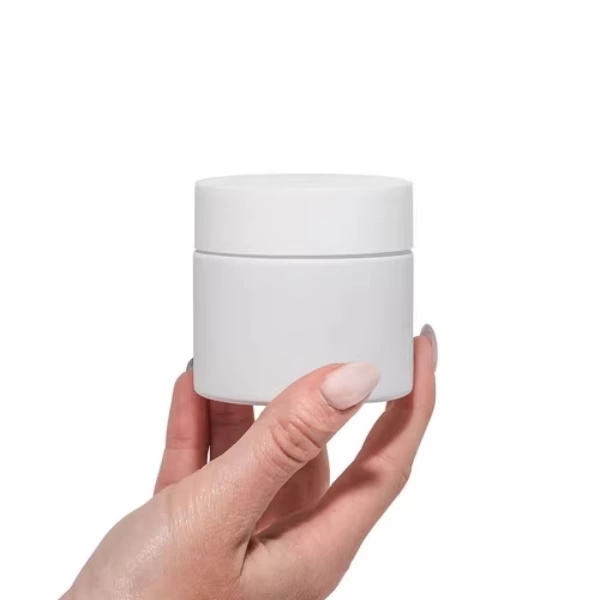
A true child proof container relies on a clever mix of human anatomy and cognitive development. Children under five years old lack certain fine motor skills and hand strength. A effective packaging design exploits this difference. Most child resistant caps require two simultaneous motions to open. For example, a user might need to push down heavily while twisting the lid, or pinch the sides of the cap while pulling upward.
This dual-action mechanism is highly effective for prevention. A toddler might be able to twist a standard flip top, but they cannot coordinate pushing and turning at the same time. The manufacturing process for these caps requires precision engineering. If the diameter of the inner threads is even slightly off, the closure might jam or fail to lock completely.
"A well-engineered closure protects the child without punishing the adult consumer."
You must ensure that the seal mechanism resets automatically when the adult screws the cap back on. This reliability is the hallmark of high-quality product packaging.
What are the key compliance standards for a child-resistant closure?
Navigating the legal landscape of child-resistant packaging can feel overwhelming. Every jurisdiction has its own specific rules. However, most international markets look to established ISO (International Organization for Standardization) standards. These standards dictate the exact protocol a container must pass to be legally certified as CR (Child Resistant).
Testing involves real children and senior adults. To pass, the packaging must be significantly difficult to open for a child under five, but accessible enough that a senior citizen can open it without extreme frustration. This balance is critical for consumer product safety.
Furthermore, your packaging must often be tamper evident. A tamper evident band or seal shows the consumer whether the jar has been opened before purchase. By combining a CR cap with a tamper proof ring, you guarantee total compliance and build ultimate trust with your buyers.
Can child resistant caps be both safe and easy open for adults?
Absolutely. In the past, a childproof lid was notoriously frustrating for everyone. Adults would struggle, use tools, or simply leave the cap off—which completely defeated the purpose of the child safety feature. Today, modern engineering has solved this pain point.
Brands now demand easy open solutions that still meet strict safety codes. The best child resistant lids use smooth, low-friction threading. The "push and turn" motion feels fluid rather than sticky. This ensures high consumer satisfaction. If your drug packaging or cosmetic jar frustrates your target audience, they will not buy it a second time.
When you source your components, you must carefully assess how the lid feels in your hand. Test it repeatedly. A high-quality closure should click smoothly into place, reassuring the adult that the container is securely locked.
How do innovations in packaging design improve the cosmetic jar and glass vial?
The cosmetic industry thrives on visual appeal. Consumers buy with their eyes. Historically, child-resistant options were bulky, ugly plastic items. Today, innovation has transformed the landscape. You can now source luxurious, heavy-bottomed glass jars with sleek, flush-fitting child-resistant caps.
For example, a delicate glass vial holding a potent essential oil can now feature a beautiful dropper assembly that locks securely. Whether you need a tiny tin for solid perfume or a premium custom mini cosmetic cream jar with an elegant lid, the options are limitless.
These innovations allow brands to maintain their high-end aesthetics without sacrificing compliance. You can have a beautiful matte-frosted glass base paired with a bamboo-wrapped child-proof lid, offering the best of both worlds.
Why is a wide mouth jar or pop top tin a popular packaging option today?
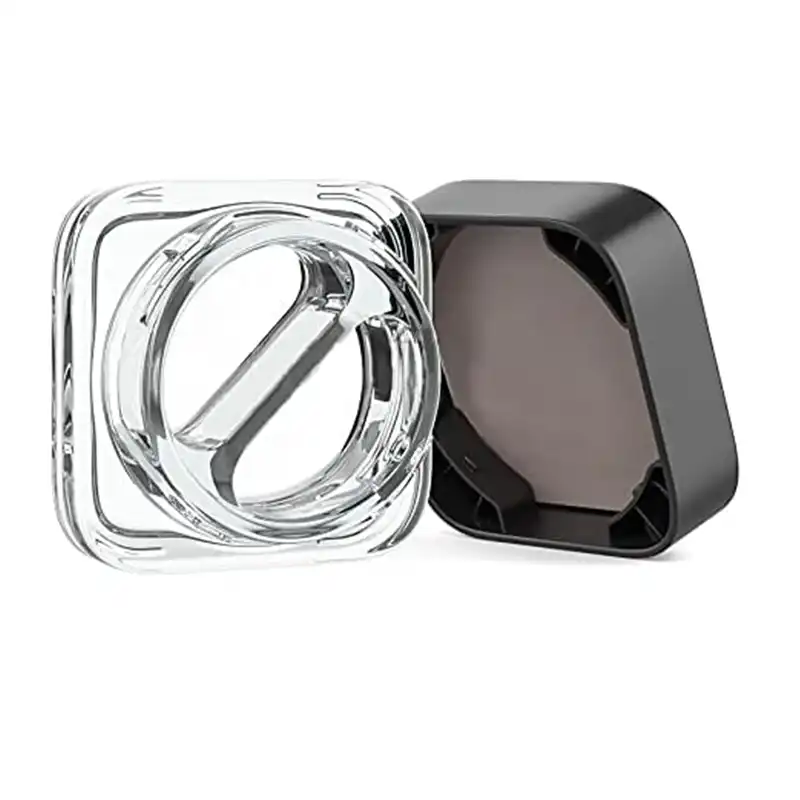
When dealing with solid goods—like botanical flowers, bath salts, or edible gummies—product accessibility is key. A wide mouth container is incredibly popular because it allows the consumer to easily reach inside. You don't want your customers struggling to pull a product out of a narrow neck.
- Versatility: A wide opening accommodates spoons, scoops, or just fingers.
- Visibility: It showcases the texture and color of the product beautifully.
- Filling Speed: For the manufacturer, wider openings mean faster, cleaner filling on the production line.
Additionally, the pop top mechanism is gaining massive traction. This packaging option often requires the user to squeeze the sides of a tin or plastic tube to pop the top open. It is a brilliant, highly effective child resistant design that feels modern and fun for the adult user.
What makes an airtight child proof container ideal for humidity and spill control?
Safety isn't just about keeping kids out; it is also about keeping the product pristine. An airtight container protects your investment. If you are selling a premium face cream or a delicate botanical, exposure to air will ruin it.
A high-quality child-resistant packaging solution incorporates a specialized liner inside the cap. When the lid is locked down, this liner compresses against the glass rim, creating a perfect vacuum. This seal locks out outside humidity, preventing dry goods from molding and wet goods from drying out. It guarantees absolute freshness.
Furthermore, an airtight lock prevents a disastrous spill. If a customer drops a beverage bottle or a jar of expensive liquid foundation in their purse, a reliable closure ensures not a single drop leaks out. This dual-purpose functionality—safety and preservation—is why premium brands insist on airtight proof containers.
Glass versus translucent plastic container: Which child-proof material is more durable?
When selecting your packaging, the debate between glass and plastic is inevitable. Both have their place, but they offer very different benefits.
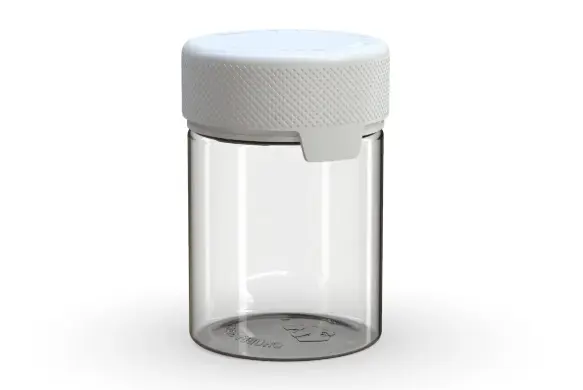
A translucent plastic container—often made from PP (Polypropylene) or PET—is lightweight and virtually shatterproof. If you are shipping internationally in massive bulk, plastic bottles reduce freight costs significantly. However, plastic can sometimes interact chemically with certain highly concentrated essential oils, and it lacks the heavy, luxurious feel of glass.
Glass jars, on the other hand, are the gold standard for high-end product quality. Glass is inert; it will not leach chemicals into your product. It is incredibly durable against chemical breakdown. Furthermore, glass supports sustainability efforts. It is infinitely recyclable and appeals to eco-conscious consumers demanding sustainable materials. By using high-quality glass dropper bottles equipped with a childproof screw cap, you signal to the market that your brand values both safety and premium raw materials.
How do child resistant lids impact overall brand identity and consumer experience?
Your packaging is the very first physical interaction a customer has with your brand. It speaks volumes before they even test the product inside. If you use a cheap, rattling cap that breaks after three uses, your brand identity suffers.
High-quality child resistant lids enhance the consumer experience. They should feel substantial. When a customer pushes down and turns the closure, the tactile feedback—the smooth glide and the satisfying 'click'—communicates reliability. It tells the customer, "This company cares about details."
You can completely customize your child proof container to match your brand's vibe. Want a sleek, minimalist look? Choose a matte black flush-fit cap. Going for an organic, earthy feel? Opt for a wood-grain finish. Never let regulatory requirements force you into ugly packaging. Embrace the options and make your safety features a core part of your premium branding strategy.
To see how aesthetics and compliance blend perfectly, explore this straight sided jar equipped with a secure CRC cap.
What should you look for in a reliable supplier for proof containers?
Finding the right manufacturing partner is the most crucial step in your supply chain. You cannot afford to work with a supplier who cuts corners on safety mechanisms.
Here is a checklist for evaluating a packaging partner:
- Certifications: Do they provide testing certificates proving their CR caps meet international ISO standards?
- Customization: Can they offer specific colors, frosting, or logo embossing to match your brand?
- Complete Solutions: Do they sell the jar and the cap as a tested, unified unit? Buying them separately often leads to leaking and tamper band failures.
- Consistency: Do their manufacturing process checks guarantee that every single cap threads perfectly onto every single bottle?
You want a partner who acts as an advisor, helping you navigate the complexities of child-resistant regulations. For example, selecting a ready-to-ship, pre-tested 120ml child resistant glass dome jar can save you months of R&D headaches and speed up your time to market.
Key Takeaways to Remember
- Safety is Mandatory: Using a proper child proof container is legally required for many products to prevent accidental poisoning.
- Dual-Action is Standard: Most reliable child resistant caps require a simultaneous push-and-turn or pinch-and-pull motion.
- Aesthetics Matter: You no longer have to choose between safety and beauty; modern packaging design offers stunning, premium options for any jar or vial.
- Protect the Product: An airtight seal does double duty—it keeps kids out while locking in freshness and stopping spills.
- Choose the Right Material: Weigh the lightweight convenience of a plastic container against the premium, sustainable durability of glass.
- Verify Your Supplier: Always ensure your manufacturer provides documented proof of compliance and reliable tamper evident features.
By carefully selecting your child-resistant packaging, you protect the most vulnerable populations while simultaneously building a trustworthy, premium image for your brand. Take the time to source the perfect closure, and your customers will reward you with their loyalty.
Post time: 06-26-2026