

If you package concentrates — whether wax, shatter, essential oils, or cosmetic serums — you have probably been told to use a "UV jar." But what exactly makes a jar UV-protective, and why does it matter so much for concentrates?
This guide explains everything you need to know about UV concentrate jars: how they protect your product, which materials work best, and how to choose the right jar for your brand.
The Short Answer
UV concentrate jars are packaging containers designed to block or absorb ultraviolet (UV) light so the product inside stays stable, potent, and fresh. They are typically made from amber glass, black glass, or UV-coated glass, and are widely used for cannabis concentrates, essential oils, botanical extracts, and other light-sensitive formulations.
For any concentrate brand, UV protection is not a luxury — it is a core part of product quality and shelf life.
Why Do Concentrates Need UV Protection?
Light is one of the biggest enemies of concentrated products. Here is what UV light does over time:
- Degrades cannabinoids and terpenes — in cannabis concentrates, UV exposure breaks down valuable compounds, reducing potency and flavor.
- Accelerates oxidation — light speeds up oxidation reactions, which can darken oils, change viscosity, and produce off-flavors.
- Damages active ingredients — essential oils, vitamins, and cosmetic actives like retinol and vitamin C lose effectiveness when exposed to light.
- Shortens shelf life — products that should last 12–24 months can degrade much faster in clear packaging.
Amber and black glass block the vast majority of UV and visible light, keeping the contents in a stable, dark environment — the same reason medicines, beer, and wine have always used dark bottles.
What Makes a Jar "UV"?
A jar earns the "UV" label through its material and color:
| Material | UV Blocking Ability | Best For | Notes |
|---|---|---|---|
| Clear glass | Low | Short-term display, non-light-sensitive products | Lets light through, fastest degradation |
| Cobalt blue glass | Moderate | Essential oils, some cosmetics | Blocks part of the spectrum, premium look |
| Amber glass | High (blocks ~90%+ of UV) | Concentrates, oils, tinctures | Industry standard for light protection |
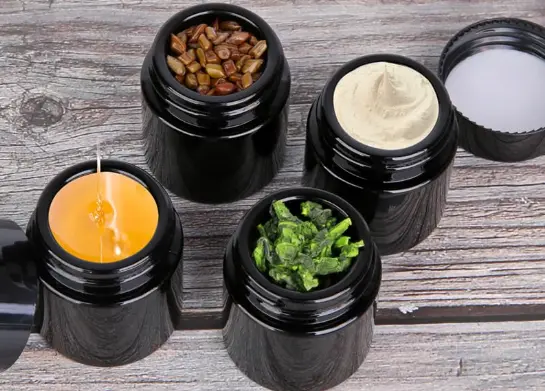
| Black glass | Very high (blocks nearly all light) | Cannabis concentrates, premium cosmetics | Maximum protection, opaque design |
| UV-coated clear glass | High (coating dependent) | Brands that want clear-glass aesthetics | Coating adds cost and must be verified |
Amber glass is the classic choice: it blocks most UV-A and UV-B radiation while remaining affordable and widely recyclable. Black glass offers the highest level of protection and a distinctly premium look, which is why many concentrate brands choose it for top-shelf products.
Key Features of a Quality UV Concentrate Jar
Beyond UV protection, a professional concentrate jar should combine several features:
1. Airtight, Leakproof Seal
Concentrates are volatile — terpenes evaporate, and moisture ruins texture. A quality jar uses an airtight closure, often with a PTFE (Teflon) liner or silicone gasket, to keep the product fresh and prevent leaks.
2. Food-Grade, Safe Materials
Glass must be food-grade and non-reactive so it does not leach anything into the product. For cannabis and cosmetic use, look for jars that meet relevant food-contact safety standards.
3. Child-Resistant Options
For cannabis concentrates and other regulated products, child-resistant (CR) closures are often required by law. Many suppliers offer UV jars with CR caps or pop-top lids.
4. Durable, Stable Build
Thick glass walls resist cracking during handling and shipping, and a stable base keeps the jar upright on shelves and in the lab.
5. The Right Size
UV concentrate jars come in common sizes such as 1g, 2g, 3.5g, 5g, 7g, 14g, and 28g capacities, letting brands match packaging to their SKU sizes.
Common Applications of UV Concentrate Jars
- Cannabis concentrates — wax, shatter, budder, live resin, rosin, and distillate.
- Essential oils and aromatherapy — pure oils and blends that degrade quickly in light.
- Cosmetic actives — serums, creams, and treatments containing vitamin C, retinol, or botanical extracts.
- Tinctures and supplements — herbal extracts and liquid supplements requiring light protection.
- Flavor extracts and food oils — premium culinary oils and flavor concentrates.
- Lab and research samples — light-sensitive chemical and botanical samples.
How to Choose the Right UV Concentrate Jar
Follow this checklist when sourcing jars for your brand:
- Match the material to the product — amber for everyday products, black glass for maximum protection and premium branding.
- Confirm the UV protection level — ask the supplier for UV transmission data rather than assuming color alone guarantees protection.
- Check the seal quality — airtight, leakproof closures with PTFE liners are essential for terpene-rich products.
- Verify child-resistant compliance — if you sell regulated concentrates, confirm the closure meets the requirements of your target market.
- Choose appropriate sizes — plan for your full product line, from 1g sample jars to 28g bulk sizes.
- Test before committing — run leak, drop, and light-exposure tests with your actual product before placing a large order.
UV Jars vs. Mylar Bags vs. Clear Jars
| Packaging | UV Protection | Product Visibility | Premium Feel | Best Use |
|---|---|---|---|---|
| Clear glass jar | Low | High | High | Non-sensitive products |
| Amber glass jar | High | Low | Medium-High | Standard concentrates |
| Black glass jar | Very high | None | Very high | Premium concentrates |
| Mylar bag | Very high | None | Low | Budget/bulk packaging |
If brand image matters, glass wins — and UV glass specifically protects your product while delivering the premium, trustworthy look consumers expect from concentrate brands.
Frequently Asked Questions
Q: What are UV concentrate jars used for? A: They store light-sensitive concentrates such as cannabis wax, rosin, essential oils, and cosmetic actives, protecting them from UV degradation so they stay potent and fresh longer.
Q: Is amber glass actually UV protective? A: Yes. Amber glass blocks the majority of UV-A and UV-B radiation and is the industry standard for light-protective packaging. Black glass blocks nearly all light.
Q: Can I use clear jars for concentrates? A: You can, but clear jars allow UV light to degrade the product over time, reducing potency, flavor, and shelf life. UV-protective glass is strongly recommended for concentrates.
Q: What sizes do UV concentrate jars come in? A: Common capacities range from 1g to 28g (1 oz), including 3.5g, 5g, 7g, and 14g sizes, with child-resistant and tamper-evident closure options.
Q: Do UV jars need special closures? A: Concentrate jars should use airtight, leakproof closures, ideally with PTFE or silicone liners to prevent terpene loss and moisture damage. Child-resistant closures are required for many regulated markets.
Final Verdict
UV concentrate jars are essential packaging for any brand selling light-sensitive concentrates. The right jar — whether amber glass for everyday products or black glass for a premium line — preserves potency, flavor, and shelf life while reinforcing your brand's quality image.
When sourcing jars, prioritize real UV protection, airtight seals, food-grade materials, and compliant closures. Test your packaging with your actual product before scaling up, and choose a supplier that can document its quality.
Need reliable UV concentrate jars for your product line? Our team at eaglebottle.com offers a wide range of amber and black glass jars with custom sizes and closures — contact us here for samples, quotes, and OEM support.
Post time: 09-12-2026