

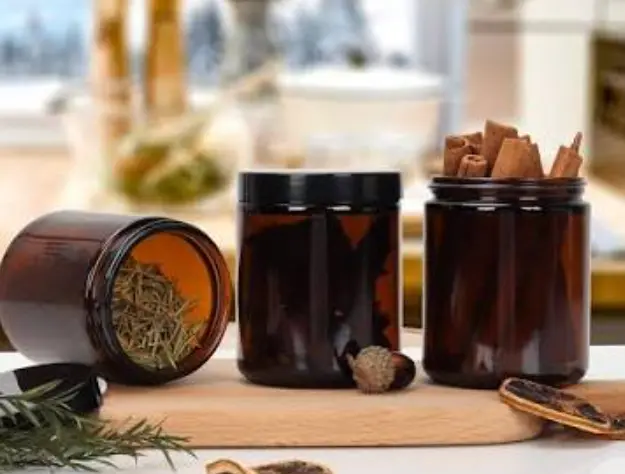
Amber glass jars are brown-tinted glass containers used to package, store, and protect products that may be sensitive to light. Their warm amber color helps reduce exposure to certain light wavelengths, making them popular for cosmetics, herbal products, creams, balms, powders, supplements, candles, aromatics, laboratory materials, and specialty retail goods.
For packaging buyers, Amber Glass Jars are not only chosen for appearance. They are selected because they combine product protection, shelf appeal, chemical stability, and a premium brand image. In markets where customers judge quality through packaging, amber glass can make a product feel more refined, natural, and carefully protected.
Why Amber Glass Is Brown
Amber glass gets its color from the materials used during glass production. The brown tint is not simply a surface coating in many cases. It is usually part of the glass itself, which means the color does not easily scratch off like paint or external decoration.
This built-in color helps create a consistent look while providing light-filtering benefits. For brands that package formulas or ingredients affected by light exposure, amber glass offers a practical protective advantage.
What Are Amber Glass Jars Used For?
Amber glass jars appear across many industries because they are versatile and visually trusted.
Common uses include:
- Cosmetic creams
- Balms and salves
- Body butter
- Herbal products
- Powders
- Supplements
- Essential oil blends
- Aromatic products
- Candles
- Wax products
- Food samples
- Laboratory storage
- Specialty retail goods
- Gift packaging
Their most common role is to provide a stable, reusable, and attractive container for products that need better protection than clear plastic or lightweight packaging can offer.
Light Protection: The Main Advantage
The biggest reason brands choose Amber Glass Jars is light protection. Some products may change color, lose fragrance, degrade, or become less stable when exposed to strong light for long periods.
Amber glass helps reduce this risk by limiting light exposure. It is especially useful for products stored on retail shelves, in bathrooms, near windows, or in warehouses where lighting conditions vary.
It is important to understand that amber glass does not make a product invincible. Packaging should still be tested with the actual formula, closure, liner, and storage environment.
Amber Glass vs. Clear Glass
Clear glass gives customers full product visibility. It is useful when color, texture, or layering is part of the product appeal. For example, bath salts, decorative candles, colorful powders, or visually attractive creams may benefit from clear jars.
Amber glass provides a more protective and traditional appearance. It can hide minor color changes and create a warmer, more natural presentation. It is often selected for botanical, wellness, apothecary-style, skincare, and premium handmade products.
The better choice depends on the product’s stability and brand position.
Amber Glass vs. Plastic Jars
Plastic jars are lightweight, low-cost, and impact-resistant. They are useful for many high-volume products. However, plastic may not provide the same premium feel, odor resistance, or long-term material stability as glass.
Amber glass offers:
- Better perceived quality
- Stronger odor resistance
- Good barrier properties with the right closure
- Reusable packaging appeal
- Light-filtering color
- Smooth premium surface
- Compatibility with many formulas
The tradeoff is that glass is heavier and can break if dropped. Shipping protection and packaging design should account for this.
Cap and Liner Selection Matters
A jar is only one part of the packaging system. The cap and liner also affect product protection.
Common closure options include:
- Screw caps
- Metal lids
- Plastic lids
- Child-resistant caps
- Foam liners
- Pressure-sensitive liners
- Induction liners
- Sealing discs
- Tamper-evident options
For creams, powders, and sensitive products, liner selection can affect moisture control, leakage resistance, odor containment, and shelf presentation.
A premium amber jar with the wrong closure may not perform well. Buyers should always test the complete package.
Choosing the Right Jar Size
Amber glass jars come in many sizes, from small sample containers to larger retail jars. Choosing the right capacity affects product cost, shipping weight, label area, customer use, and shelf display.
Before ordering, consider:
- Fill volume
- Product density
- Headspace requirement
- Label size
- Cap diameter
- Customer handling
- Shipping carton design
- Retail shelf height
- Batch size
- Product price point
A small jar can feel premium for concentrated formulas. A larger jar may be better for creams, candles, or bulk products.
Surface and Branding Options
Amber glass already has a strong visual identity, but brands can customize it further.
Popular branding options include:
- Printed labels
- Screen printing
- Matte caps
- Glossy caps
- Embossed logos
- Shrink bands
- Outer cartons
- Kraft packaging
- Metal lids
- Custom color caps
- Product inserts
Because amber glass has a deep color, label contrast is important. White, cream, black, gold, and earthy label palettes often work well, but the final choice should match the brand image.
Quality Checks for Packaging Buyers
Before purchasing Amber Glass Jars, buyers should inspect both appearance and function.
Key checks include:
- Glass wall consistency
- Color uniformity
- Neck finish accuracy
- Cap fit
- Thread quality
- Base stability
- Surface defects
- Internal cleanliness
- Labeling area
- Packaging protection
- Batch consistency
- Closure compatibility
For brands ordering in bulk, sample testing before mass production is a smart step.
Storage and Handling
Amber glass jars should be stored clean, dry, and protected from impact. Empty jars should be kept in packaging until filling to reduce dust and contamination. Filled jars should be packed with suitable dividers, cartons, or cushioning to reduce breakage during transport.
Even though amber glass helps with light protection, finished products should still be stored according to the formula’s recommended conditions.
Conclusion
Amber glass jars are brown-tinted glass containers designed for product protection, light reduction, premium presentation, and reliable storage. They are widely used for cosmetics, balms, herbal products, candles, supplements, aromatics, and specialty retail goods.
For brands, Amber Glass Jars offer a balance of function and appearance. The right jar should match the product formula, cap system, label design, shipping method, and customer experience. When chosen carefully, amber glass packaging can help protect product quality while strengthening brand value.
For amber glass jar product information, visit Eagle Bottle.
Post time: 08-19-2026