


Buyer's Guide
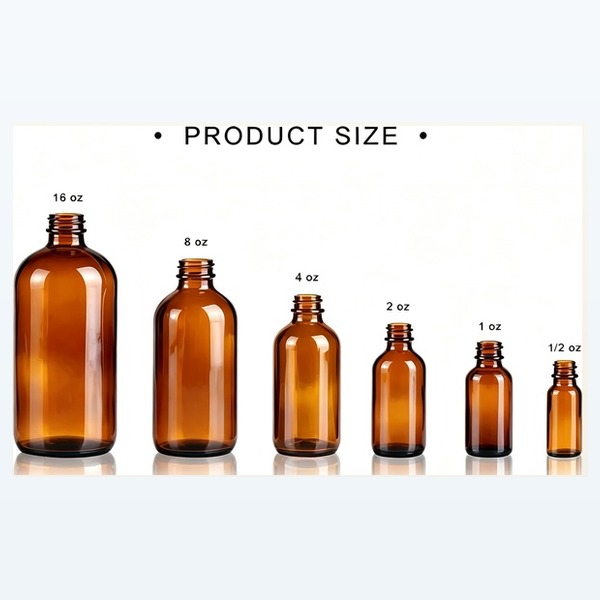
How to Choose the Right Dropper Bottle for Essential Oils
Sizes from 5 ml to 100 ml, amber vs cobalt vs clear, child-resistant closures and neck finishes.
Sep 13, 2026
Flower jars look simple, but the right choice balances three things: how much product the customer buys, how well the jar preserves it, and whether it clears your market's compliance rules. Get any one wrong and you either lose sales or fail inspection.
Cannabis flower is sold in small weights, and the packaging industry has settled on a familiar ladder:
| Size | Common fill | Position |
|---|---|---|
| 3.5 g (1/8 oz) | 5–10 ml capacity range | Most popular single purchase |
| 7 g (1/4 oz) | ~15 ml | Regular users |
| 14 g (1/2 oz) | ~30 ml | Value size |
| 28 g (1 oz) | ~60 ml | Bulk / shared |
Most brands carry two or three of these. If you stock only one, make it 3.5 g — it is the volume driver across North America.
Cannabis packaging moves fast, which makes mould strategy a bigger decision than most buyers expect. If a public mould already exists in the size and profile you want, you skip tooling entirely and go straight to production — the quickest route, but your jar will look like everyone else's. A private mould gives you a distinctive silhouette and usually carries a one-time tooling cost plus a higher minimum order quantity, because the factory has to amortise the mould across fewer units.
The trade-off is worth thinking through before you commit. A private mould only pays back if you expect to reorder; a single seasonal run is normally better served by a public mould with a custom closure or decoration. Lead time on a public-mould order is commonly four to six weeks, while a new private mould adds tooling time on top of that — quoted separately from production, and worth asking about explicitly rather than assuming.
Light degrades cannabinoids and terpenes. That makes glass colour a preservation decision:
Where regulations require opaque packaging, amber or fully coated glass is the safe route.
Flower quality depends heavily on humidity and oxygen exposure. A good jar does three jobs:
A heavy jar with a poor liner will fail at the one job that matters. Always test the seal, not just the look.
A wide mouth and a thin wall is the hardest combination to ship, and flower jars sit close to that profile. Breakage rarely happens in transit on its own; it happens because the inner packing lets jars touch, or because a case is loaded without enough compression so the outer carton flexes and transfers load into the glass.
Practical safeguards that hold up in real conditions: a partitioned inner carton so no jar contacts another, a corrugated grade chosen for the pallet height rather than the jar weight alone, and stretch or shrink wrap that keeps the load rigid so the bottom layer is not absorbing the movement of the top. If your distributor intends to re-pack, ask whether they plan to reuse your cartons — reused cartons are a common source of breakage claims, and specifying single-trip packing in the quotation avoids the argument later.
For US and Canadian markets, confirm each of these before ordering:
| Requirement | What to check |
|---|---|
| Child-resistant closure | CR tested with your exact bottle; test report on file |
| Tamper evidence | Band or seal that shows clearly if opened |
| Opacity (where required) | Amber or opaque coating |
| Labelling space | Room for warnings, THC content, batch and symbol |
| Material compliance | FDA-compliant or food-contact documentation |
See our guides on US vs Canada CR rules and how CR certification works for the detail behind these.
Many brands run printed jars for core sizes and labelled jars for rotating strains.
Two jars that look identical in a photograph can differ substantially in price, and the gap is rarely the factory's margin. Glass weight is the first variable: a heavier jar uses more material and costs more to ship, and while weight reads as quality on a shelf, much of that perception can also be achieved through profile and base thickness rather than raw mass.
Closure choice is the second. A standard screw cap and a child-resistant closure with a tested liner sit far apart in cost, and the gap widens once certification is included. Decoration is the third: screen printing is priced by colour and by pass, so a two-colour design is not simply double a one-colour design once setup is counted. Finally, quantity drives almost everything per unit — the quoted price for 5,000 pieces and for 50,000 pieces is not a modest difference, which is why it is worth asking for a quantity-break table rather than a single figure.
"Nice seals. The glass is heavy with sturdy lids, just as described. Worked great for our needs — we would buy again."
"I’m happy with everything — no complaints at all. Shoutout to the supplier and the workers, very good job!"
Prefer to buy through a platform? Find our verified storefronts below — same factory, same factory-direct pricing.
Buyer guides and packaging know-how from the Eaglebottle team.
Sizes from 5 ml to 100 ml, amber vs cobalt vs clear, child-resistant closures and neck finishes.
Product stability, barrier properties, brand perception, shipping cost and real unit economics.
What each size is really for, spray counts, crimp vs screw closures and how to plan your range.
Nine stages, the documents you need, landed cost and the five costly mistakes.
Typical minimums by product, price tiers and five ways to lower your MOQ.
Capacity vs brimful, neck finishes like 18/415, tolerances and closure fit.
16 CFR 1700, ASTM D3475 and Health Canada requirements side by side.
What the test panels measure, closure classes, and what to demand from suppliers.
Sizing, glass type, airtight seals and the North American compliance checklist.
A clear, repeatable process — so you always know what happens next and when your shipment leaves.
Tell us your sizes, quantities and decoration ideas — free samples are available before you commit.
Contact Us Today