


Buyer's Guide
How to Choose the Right Dropper Bottle for Essential Oils
Sizes from 5 ml to 100 ml, amber vs cobalt vs clear, child-resistant closures and neck finishes.
Sep 13, 2026
A tincture bottle has to do three jobs at once: deliver an accurate dose, protect a light- and oxygen-sensitive oil, and stay closed to a five-year-old. The third job is the one that turns a packaging preference into a legal obligation — and it is where most first-time CBD brands lose weeks. This guide explains what child-resistant packaging actually requires, how the main CR dropper designs differ, which sizes and finishes tincture brands use, how certification testing is run, and what to put in writing before you place an order.
Child-resistant packaging rules are triggered by the hazard of the contents, not by the marketing category. A tincture is a concentrated liquid, often alcohol- or oil-based, dispensed from a small bottle with an eyedropper — a combination regulators treat as a poisoning risk. In the United States the trigger is the CPSC's special packaging rules; in Canada the equivalent provisions under consumer product safety law; in the European Union the reference standard is ISO 8317 for reclosable child-resistant packaging.
The practical consequence is simple: if your product falls within scope in the market you sell into, a standard screw cap is not a compliant closure, no matter how well it seals. Compliance is a property of the package — jar, cap and liner together — not of the cap alone.
Child-resistant packaging has a deliberately two-sided definition. The package must be difficult for a young child to open within a defined time, and it must be not difficult for an adult — including older adults with reduced grip strength — to open and, where relevant, to reclose. A closure that frustrates everyone fails the second half of the test.
| Market | Reference | What it covers |
|---|---|---|
| United States | 16 CFR 1700.15 and 1700.20; ASTM D3475 | Special packaging requirements and the test protocol for reclosable CR packages |
| European Union | ISO 8317 (reclosable), EN 862 (non-reclosable) | The standard CR test methods used across EU markets |
| Canada | Federal consumer product safety law and the CCCR | CR and labelling requirements for regulated consumer chemicals |
| International practice | ISO 8317 as the common benchmark | Widely accepted even where not legally mandated |
Mechanically, most compliant closures work on the same principle: they require two dissimilar motions — for example squeeze and turn, or push down and turn — that a young child is unlikely to combine, but an adult can perform routinely. That is why a CR cap feels different in the hand, and why CR caps are not interchangeable between manufacturers: the mechanism is engineered against a specific neck finish.
Regulatory scope varies by product, concentration and market. Treat this section as orientation, and confirm the specific requirement with your testing laboratory and regulatory counsel before you commit to a package.
| Design | How it works | Advantages | Watch out for |
|---|---|---|---|
| CR cap with integral dropper | Push-and-turn or squeeze-and-turn cap with the pipette mounted inside; the cap is the closure and the dosing tool in one | Fewest parts; single hand motion to dose; lowest unit cost | The dropper is inside the CR mechanism — glass pipette quality and bulb material both matter |
| CR cap plus separate dropper | Plain glass bottle with a CR outer cap; a separate dropper is supplied in the carton or as a second closure | Cheaper bottle; lets you offer a glass dropper for the consumer | Consumers must swap closures, which adds friction and can defeat the CR benefit in practice |
| CR cap with tamper-evident band | CR mechanism plus a ring that breaks on first opening | CR and tamper evidence in one closure; strong retail presentation | Requires a matched band-and-cap tooling set; re-test after any tooling change |
For most CBD tincture programmes the first design is the practical answer: one closure that is both the CR device and the dosing device. The second only makes sense when the retail concept depends on a separate glass dropper.
All four parts have to be validated together. A precision CR cap on an out-of-spec neck finish is still a leaky, non-compliant package.
| Capacity | Typical finish | Typical use |
|---|---|---|
| 15 ml | 18 mm dropper finish | Trial size, sample kits, high-potency doses |
| 30 ml | 18–20 mm | The standard retail tincture — the volume most brands launch on |
| 50–60 ml | 18–20 mm | Value size; the most common repeat-purchase format |
| 100 ml | 20–24 mm | Bulk or practitioner size |
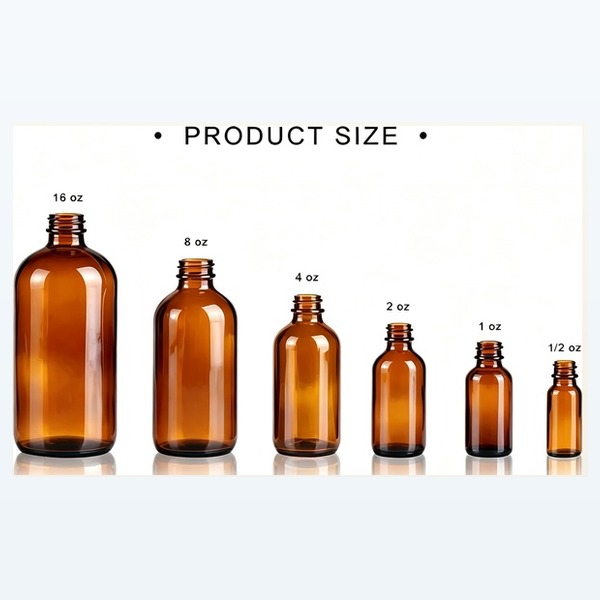
Glass colour is a separate decision, and for tinctures it is a functional one rather than cosmetic: cannabinoids and terpenes degrade under ultraviolet light, so amber, or another UV-blocking option, is the default. See How to Choose the Right Dropper Bottle for how colour, closure and neck finish interact.
CR testing is not a paper exercise and it is not a one-off inspection. The standard protocol uses two panels: a group of young children, typically aged 42 to 51 months, and a group of adults, including older adults. Both panels attempt to open the package, and the results are assessed against pass criteria.
Testing is performed by accredited third-party laboratories. Ask your supplier which laboratory ran the test, on which part numbers, and for a copy of the report — a certificate without a matching part number is not worth much at an audit.
The single most common compliance failure in this category is treating CR as an attribute of the cap. It is not. Certification applies to a package system: the specific bottle mould, the specific neck finish, the specific liner, and the specific cap in a specific orientation. Change any one of them and the certification evidence no longer describes what you are shipping.
That is why a supplier offering "a CR cap" at a lower price is not necessarily offering a cheaper compliant package — it may be offering a cap whose certification belongs to somebody else's bottle. The correct question is never "is it child-resistant?" but "is this exact bottle, finish, liner and cap combination certified, and can I see the report?"
"Nice seals. The glass is heavy with sturdy lids, just as described. Worked great for our needs — we would buy again."
"I’m happy with everything — no complaints at all. Shoutout to the supplier and the workers, very good job!"
Prefer to buy through a platform? Find our verified storefronts below — same factory, same factory-direct pricing.
Buyer guides and packaging know-how from the Eaglebottle team.
Sizes from 5 ml to 100 ml, amber vs cobalt vs clear, child-resistant closures and neck finishes.
Product stability, barrier properties, brand perception, shipping cost and real unit economics.
What each size is really for, spray counts, crimp vs screw closures and how to plan your range.
Nine stages, the documents you need, landed cost and the five costly mistakes.
Typical minimums by product, price tiers and five ways to lower your MOQ.
Capacity vs brimful, neck finishes like 18/415, tolerances and closure fit.
16 CFR 1700, ASTM D3475 and Health Canada requirements side by side.

What the test panels measure, closure classes, and what to demand from suppliers.
Sizing, glass type, airtight seals and the North American compliance checklist.
UV protection, cost and shelf appeal compared — plus a decision framework.
Sizing, glass vs silicone, CR closures and how to cut product left in the jar.
Neck finish codes like 53-400, liner selection and how to test a seal.
A clear, repeatable process — so you always know what happens next and when your shipment leaves.
Tell us shape, capacity, quantity and decoration. We send a detailed quote within 24 hours.
Stock samples ship in 3 days; custom pre-production samples in 7–15 days, so you can test before ordering.
5 furnaces and 12 lines run your order, with automatic inspection plus SGS/ISO checks — photos and reports before shipment.
Export cartons and pallets, FOB Shanghai / Qingdao / Ningbo, or DDP straight to your warehouse.
Tell us your sizes, quantities and decoration ideas — free samples are available before you commit.
Contact Us Today