Child-Resistant Cannabis Jars for US Cultivators — In Stock, DDP to Any State
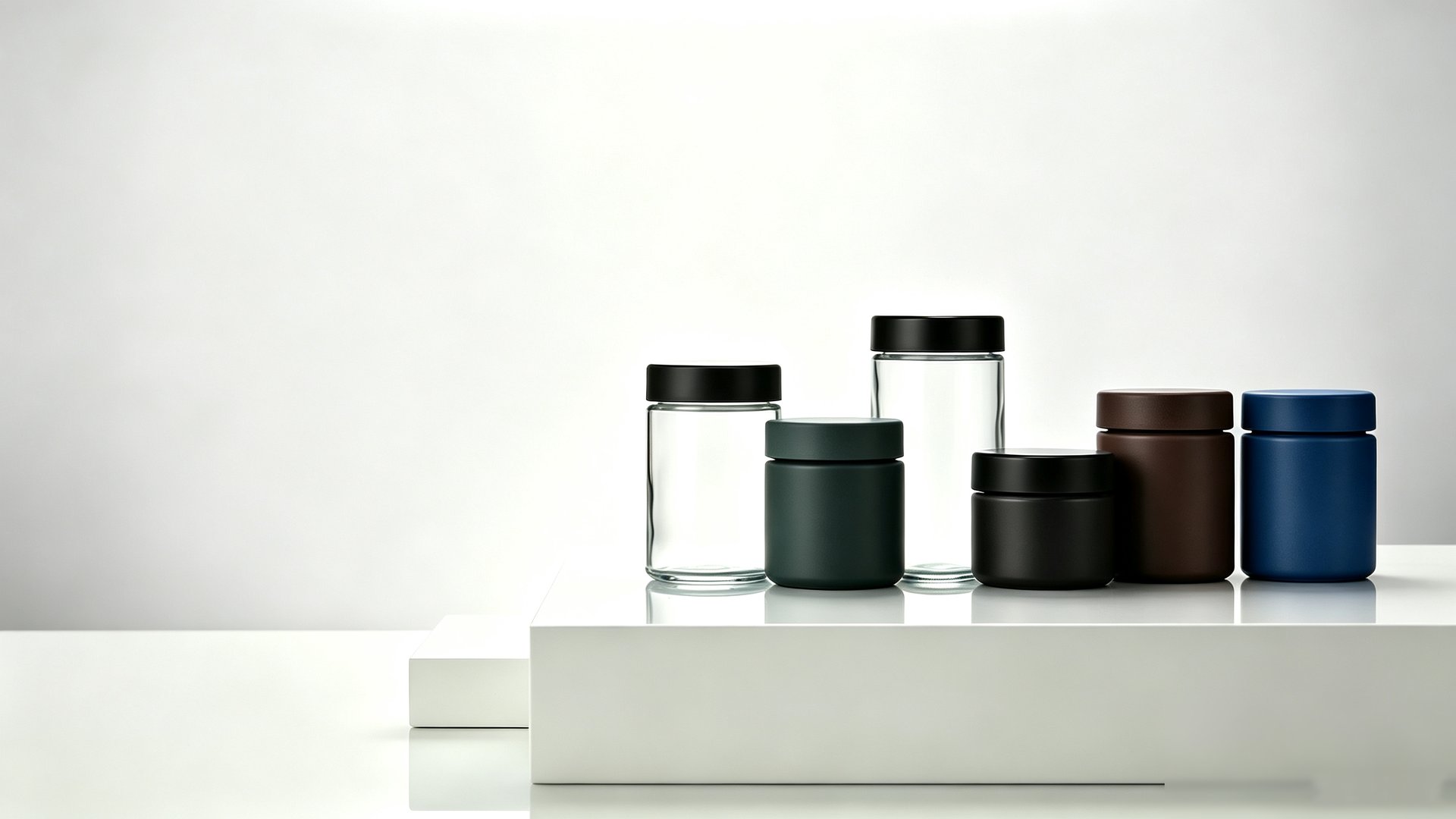
American cannabis packaging is two layers, not one: a federal standard every state refers to, and a state overlay that differs wherever you look. We cannot collapse fifty rulebooks into one for you — nobody can. What we can do is supply the layer that never changes. Our glass jars and push-and-turn child-resistant closures are tested to 16 CFR 1700.20 and classified under ASTM D3475, held in stock in China, shipped in 48 working hours, and delivered DDP so the duty, clearance and freight are inside one number rather than three invoices you discover by surprise.
The layer that does not change between states
Every legal cannabis state defines child resistance by pointing at the federal Poison Prevention Packaging Act and its implementing rule at 16 CFR Part 1700. When you read enough state regulations you notice they do not write their own closure test — they borrow the federal one and then add requirements of their own on top.
Three examples we checked directly, in different regions of the country:
- Montana sets the CR standard by administrative rule at ARM 42.39.102, which states plainly that the standard is the one set by the Consumer Product Safety Commission and the testing procedure found in 16 CFR 1700.20. Its exit packages must also be opaque, and the application requires documentation that the packaging was certified by a federally qualified third-party testing firm.
- Massachusetts requires at 935 CMR 500.105(6)(a) that product containers be opaque and plain in design, avoid bright colours and cartoon features, be resealable for any product intended for more than a single use, and be certified by a qualified child-resistant packaging testing firm against the most recent version of 16 CFR 1700.
- Rhode Island has its regulator explain that whether a package is child resistant is determined by a third-party firm following 16 CFR 1700.20, that the licensee is responsible for ensuring each package is certified, and that the Office of Cannabis Regulation will not itself certify or approve any packaging as child resistant.
That last point is the one worth reading twice. In the United States nobody hands you an approval letter for your jar. Your licence carries the obligation, and the regulator asks for the paperwork when it feels like asking.
What the federal test actually asks of a closure
Child resistance under 16 CFR 1700 is a performance test, not a drawing specification, which is why "CR compliant" printed in a catalogue means nothing on its own. The protocol at 16 CFR 1700.20 is built around a panel of children aged roughly 42 to 51 months: five minutes to open the package unaided, then a demonstration, then five more minutes. To pass, a large majority must still fail after being shown how it opens — the thresholds commonly cited are at least 85 percent failing before the demonstration and at least 80 percent after — while at least 90 percent of a senior-adult panel must be able to open the package properly. A closure that defeats adults too is a failure, not a triumph, because the states also require the package to be resealable and child resistant again after opening.
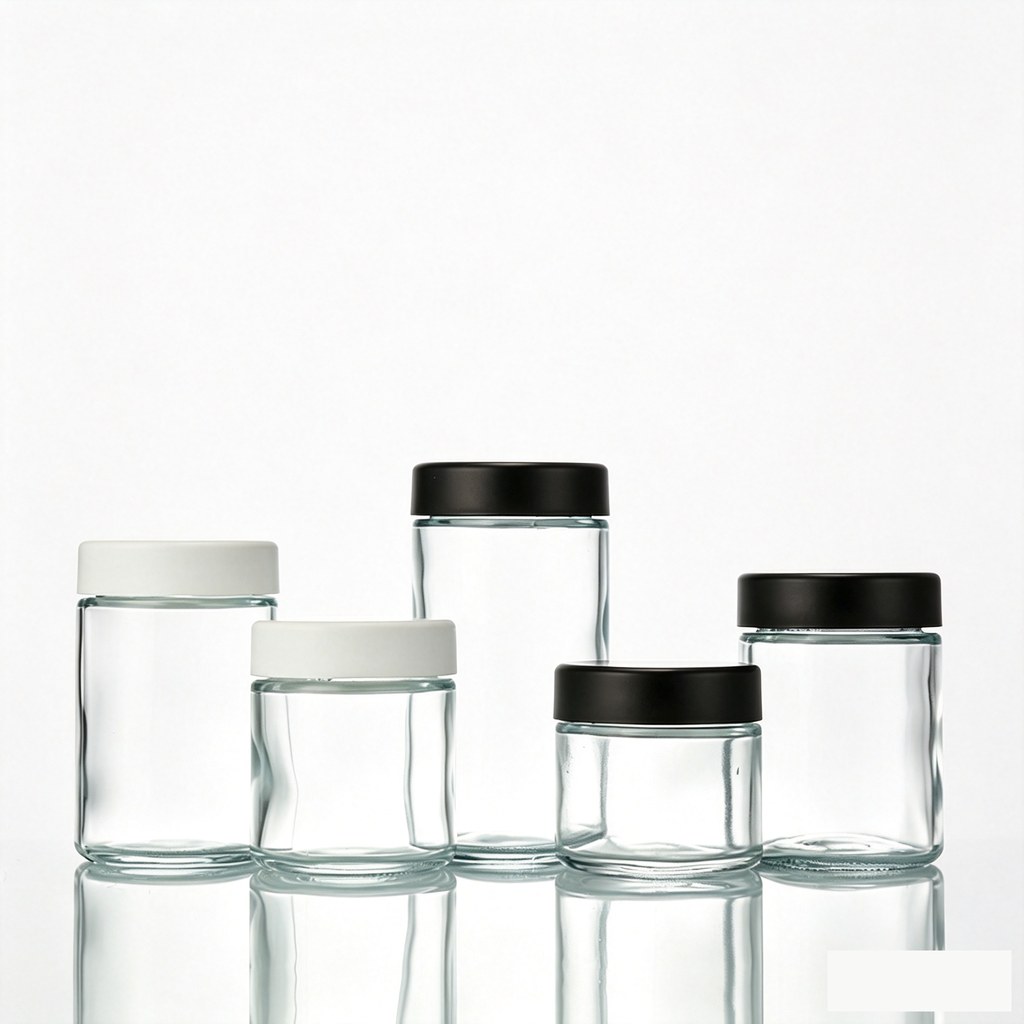
Practically, this is why every CR closure on the market is a variation on two dissimilar motions — push-and-turn, squeeze-and-turn, align-the-arrows. Our stocked closures are push-and-turn in 57 mm and 60 mm.
Ask for the document that matches your combination
Here is the part suppliers hope you skip. Child resistance is a property of the jar and the closure together, not of the cap on its own. A closure that passed panel testing on one neck finish has not automatically passed on another, and the token your state regulator asks for is the test report naming the exact combination in your purchase order.
Our child-resistant jars meet 16 CFR 1700.20 and ASTM D3475. ISO 9001, CR test reports, a compliance statement and market-specific paperwork are all available — tell us which documents your team files with its regulator and we will send them. We would rather you ask for the report up front than discover the gap during an inspection.
Sizing to a one-ounce retail ceiling
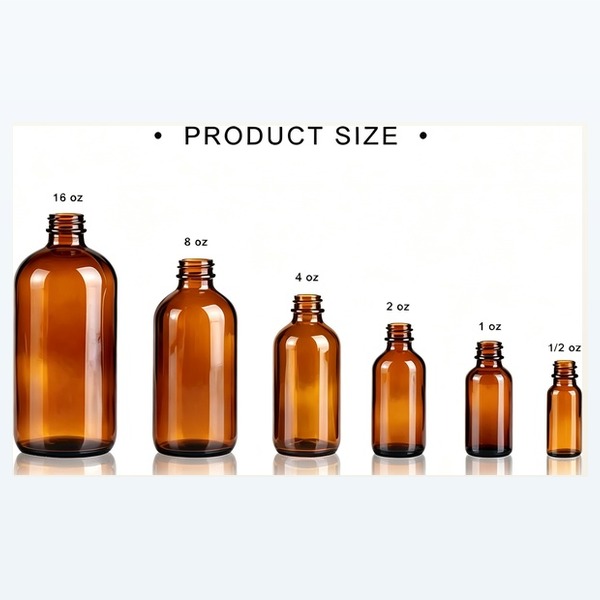
Most adult-use states cap a single retail purchase of flower at around one ounce, so 28 g is where most operators stop sizing upward. The table below maps common retail fills to the jars we hold. There is no federal container limit in the United States comparable to Canada’s 30 g rule — this is a commercial ceiling set by purchase limits, not by packaging law, so check the figure that applies in your state.
| Retail fill | Jar size we hold | Neck finish | CR closure |
|---|
| 1 g single pre-roll holders | 1 oz | 57 mm | Push and turn, black or white |
| 3.5 g — an eighth | 1 oz, 2 oz | 57 mm | Push and turn, black or white |
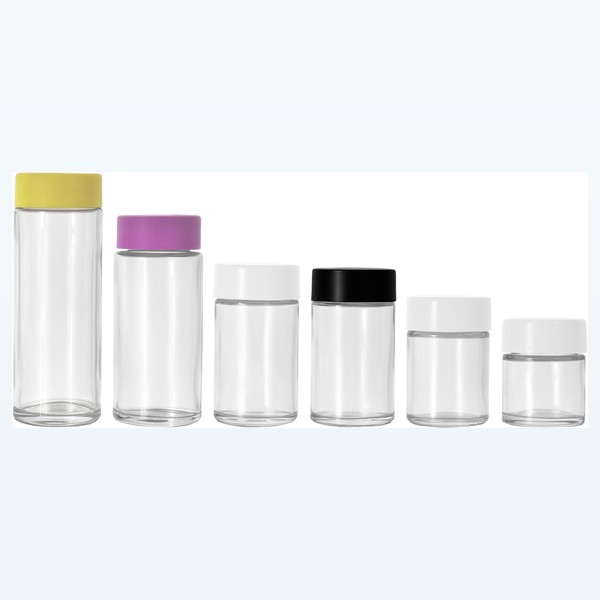
| 7 g — a quarter | 2 oz, 2.5 oz, 3 oz | 57 mm, 60 mm | Push and turn, black or white |
| 14 g — a half | 4 oz | 60 mm | Push and turn, black or white |
| 28 g — an ounce | 6 oz | 60 mm | Push and turn, black or white |
Fill a sample before committing. Density, trim style and how tightly you pack change how much flower a jar holds; loose whole bud needs more room than dense machine-trimmed flower of the same weight. Samples come from the same stock we ship from.
Tamper evidence and exit packaging
State rules add two things that the federal CR test does not cover. First, tamper evidence: many states require a single-use feature that shows visibly whether the package has been opened before purchase. We supply shrink bands matched to each closure size. Second, exit packaging: several states, including California, Colorado, Washington, Oregon and Massachusetts, require the dispensary to place products in an opaque reclosable exit bag on the way out. Exit bags are bought separately from the jar — the jar carries the CR obligation, the bag carries the discretion one.
Our state-by-state guide carries the comparison table for the ten largest markets, with the citation you can take to your compliance counsel.
You can brand your jars in the United States
This is the sharpest practical difference from Canada, and it works in your favour. Canadian rules forbid brand elements outright on the immediate container. In the United States branding is permitted — what states restrict is appeal to minors, not your logo. Read 935 CMR 500.105(6)(b) in Massachusetts for the shape of it: no neon colours, no cartoons, no imitation of a non-cannabis consumer product, no celebrities or imagery used to market to minors.
We can doCustom printing and labelling on the jar, single-colour spray coating, frosted finishes, hot stamping, and matched tamper-evident bands.
We check the artworkDesigns are reviewed against the child-appeal rules in your state before sampling, so a print job does not turn into a compliance problem after it ships.
Not ours to printThe state-mandated label — universal symbol, THC content, warnings, batch number. That is your facility or your label converter.
What the duty line does to a quote
Glass containers of the kind we ship enter the United States under HTS 7010.90.50. The column-one general rate is zero, but Chinese-origin goods currently sit under a stack: a 25 percent Section 301 List 3 rate plus a further 12.5 percent tariff applied since 2026, which puts the practical duty load near 37.5 percent of entered value. Tariff schedules move, so confirm the current figure with your broker before you budget.
The structural point is who carries that number. On self-import you carry it, plus a customs bond, broker fees and the possibility of a bill arriving weeks after a container has already been sold. On DDP terms we are the importer of record: freight, clearance and duty are inside the landed price we quote, and what we quote is what you pay. If you sell in Canada as well, note that the same jars enter Canada duty-free under HS 7010.90.00 — details on the Canadian page.
How it travels
Cartons leave us within 48 working hours for in-stock sizes. Routing then depends on which coast you are near:
- West Coast — Los Angeles, Long Beach or Oakland, typically 14 to 18 days on the water, then truck or rail inland.
- East Coast and Gulf — Savannah, Charleston, New York or New Jersey, roughly 25 to 35 days; Houston serves Gulf accounts.
- Peak season — book before Chinese New Year and before the autumn shipping crunch. Glass has no expiry date, but a container you needed in March and receive in May is still late.
Held in stockStanding lines held year-round, not a production run started after you order.
Ships in 48 hoursCartons pulled from stock. No 25 to 35 day furnace queue.
One DDP numberFreight, duty and clearance inside the quote. You are not the importer of record.
Mix sizes freelySizes and both finishes combined to reach the 3,000 piece minimum.
Order terms
Minimum order3,000 pieces per order
MixingSizes and finishes combined freely
Lead time48 working hours to ship
Delivery termsDDP, any US state
SamplesFrom the same stock we ship from
DocumentsCR test reports, ISO 9001, compliance statement
Ask for the current US stock listQuantities move week to week. The in-stock page lists the 57 mm and 60 mm series with carton specifications, and we will confirm availability for your exact list the day you ask. Send us your sizes, state and delivery city and we will reply within 24 hours with a landed price.
Questions US licence holders ask us
Is there a federal child-resistant rule for cannabis packaging in the US?
Cannabis remains federally illegal, so there is no federal cannabis packaging law as such. What there is a federal performance standard at 16 CFR Part 1700 under the Poison Prevention Packaging Act, and every state that defines child resistance does so by referencing it. In practice that makes 16 CFR 1700 the common baseline.
What is the difference between 16 CFR 1700.15 and 1700.20?
1700.15 sets out which substances require special packaging and the standard itself; 1700.20 is the testing procedure a laboratory follows to determine whether a package meets it. ASTM D3475 classifies the closure type. When a buyer asks for proof, the useful document is the third-party test report citing 1700.20 for the specific jar-and-closure combination.
Who certifies that a cannabis package is child resistant?
A third-party testing laboratory, not the regulator. Rhode Island's Office of Cannabis Regulation states directly that it will not certify or approve any packaging, and that the licensee is responsible for ensuring each package is certified. Montana asks for that certification documentation with the packaging application.
Do I need the packages to be resealable?
For multi-serving products, generally yes. Massachusetts requires at 935 CMR 500.105(6)(a) that packaging intended for more than a single use be resealable, and other states follow similar logic. Our push-and-turn closures are reclosable rather than single-use.
Can you print our logo and brand colours on the jars?
Yes, which is different from Canada where brand elements are prohibited on the immediate container. American rules restrict appeal to minors rather than branding itself: no neon colours, cartoons, celebrity imagery or imitation of mainstream snack packaging. We print, spray coat and hot stamp accordingly.
Do you supply exit bags?
Our product line is rigid packaging, so no. Exit bags are opaque reclosable bags purchased separately and applied at the dispensary in states that require them, including California, Colorado, Washington and Oregon. Our jars carry the child-resistance obligation; the bag carries the transport discretion requirement.
Is a tamper-evident band required?
Many states require a feature that reveals whether the package has been opened before purchase, though the mechanism is not usually specified. We supply heat-shrink bands sized to each closure so the first opening is visible.
What duty applies to glass jars imported from China?
The column-one general rate for HTS 7010.90.50 is zero, but Chinese-origin goods currently carry a 25 percent Section 301 List 3 rate plus a further 12.5 percent tariff since 2026, putting the practical load near 37.5 percent of entered value. Rates change, so confirm with your broker. On DDP terms that cost sits inside our landed price rather than arriving as a separate bill.
What is the minimum order for a US shipment?
3,000 pieces per order, reachable with one size or by mixing sizes and both neck finishes, so the practical minimum per individual size is well below that.
How long does delivery take to the East Coast?
48 working hours to leave us, then roughly 25 to 35 days on the water to Savannah, Charleston or New York depending on routing and season. West Coast ports typically run 14 to 18 days.
Do you ship to states where cannabis is not legal?
We ship glass containers and closures, which are ordinary articles of commerce, to addresses in all states. What your licence permits you to do with them afterwards is governed by your state.
Do you test clear glass differently from amber?
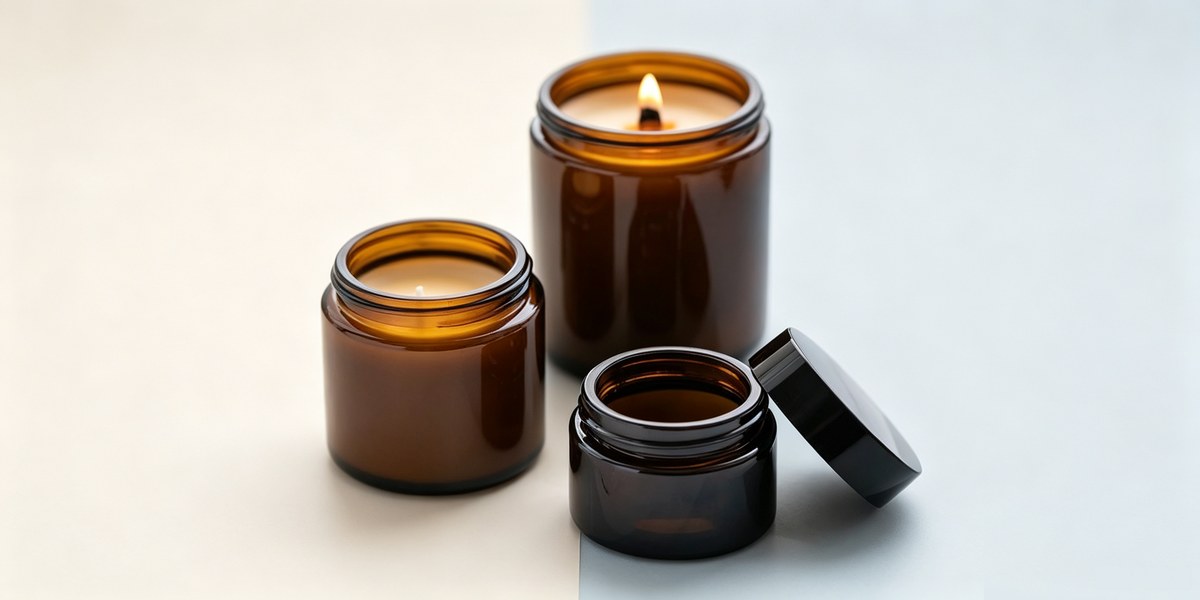
Child resistance is tested on the closure and the neck finish, so colour does not change the panel result. Where colour matters is opacity rules: some programs require an opaque container for certain product classes, and amber also protects cannabinoids and terpenes from light over a long shelf life. We hold clear and amber and can spray to a uniform colour.