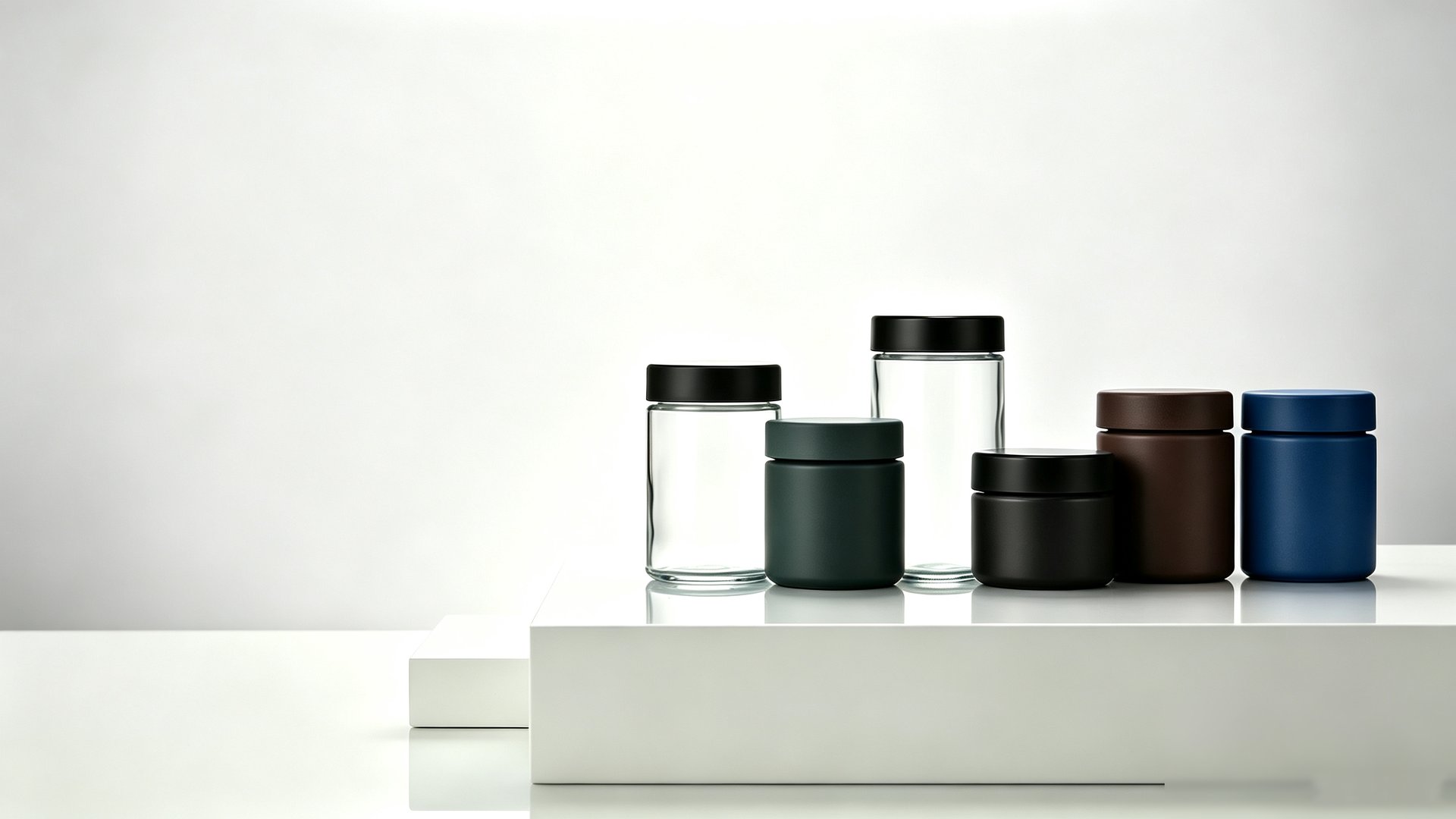
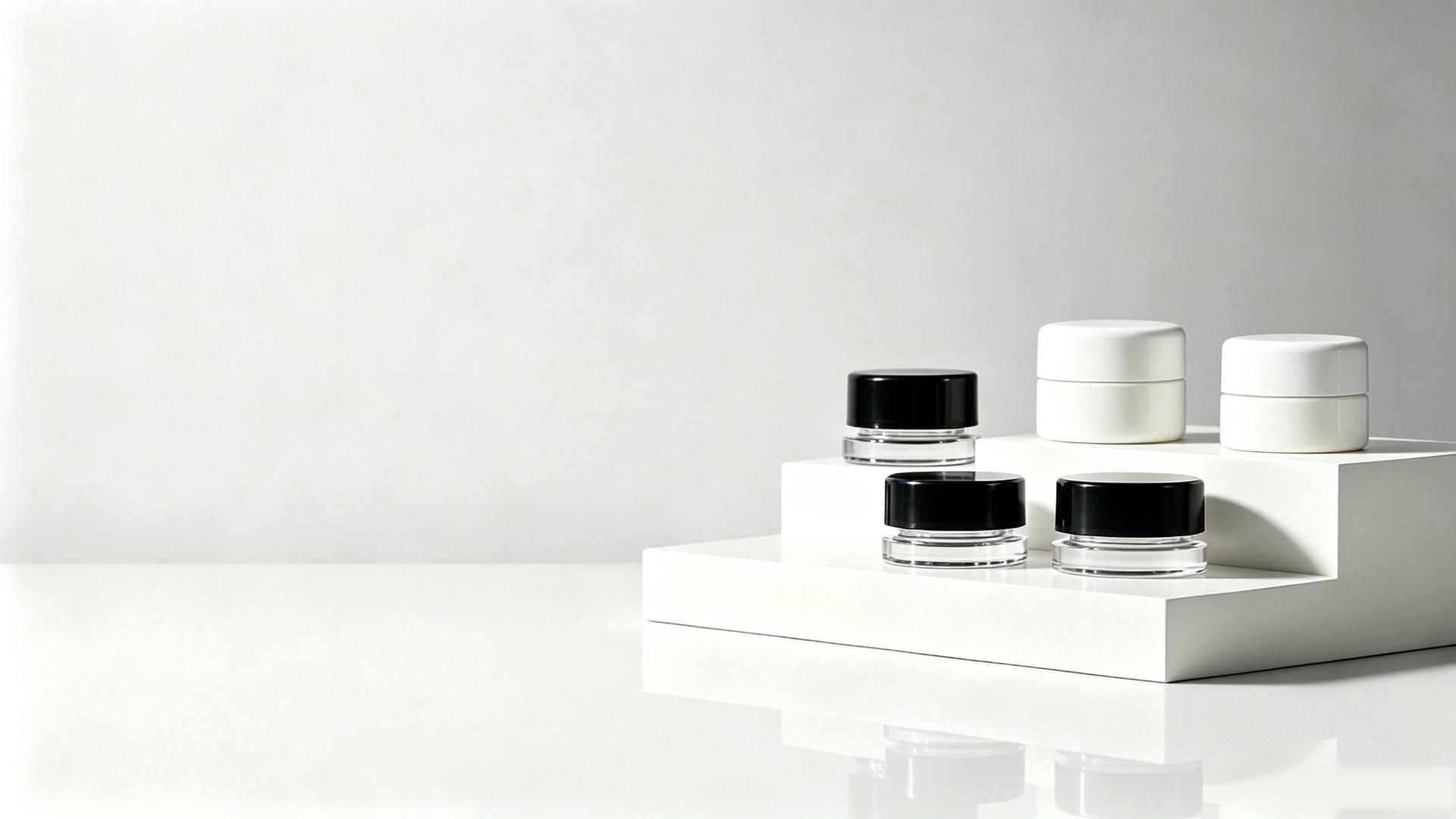
Child-Resistant Cannabis Jars for Canada — In Stock, DDP to Every Province
If you hold a Canadian cultivation or processing licence, your packaging rulebook is one document: the Cannabis Act and its Cannabis Regulations (SOR/2018-144). There is no provincial packaging code to chase, and no state-by-state rewrite every time a legislature meets. We supply the glass jars and push-and-turn child-resistant closures that fit that one rulebook — held in stock in China, shipped in 48 working hours, delivered DDP to any province on a single landed number.
One rulebook, not thirteen
In the United States, a packer shipping to five states is tracking five sets of packaging rules on top of a federal standard; our state-by-state page shows how much those diverge. In Canada the package specification is federal. Provinces and territories regulate who may sell and where, not the construction of the immediate container. A licence holder in British Columbia and one in Nova Scotia are answering the same sections of the same regulation.
That has a practical consequence for buying: one specification serves your whole Canadian footprint. You are not maintaining a separate SKU list per province, and a jar that passes in Ontario is not the wrong jar in Alberta.
What the Regulations require of the immediate container
Section 108(1) of the Cannabis Regulations sets the requirements for the container that is in direct contact with the product. This is the checklist your QA team is working from, and it is the checklist we build our stock against:
| Requirement | Where it is set | What we supply against it |
|---|
| Child-resistant | s.108(1)(e) → C.01.001(2)-(4), Food and Drug Regulations | Push-and-turn CR closures, 57 mm and 60 mm, tested to 16 CFR 1700.20 and classified under ASTM D3475 |
| Security feature | s.108(1)(d) | Tamper-evident shrink bands matched to the closure |
| Keeps the product dry | s.108(1)(c), for dried cannabis | Glass with a lined CR closure; glass does not breathe, so cure moisture stays where you put it |
| Prevents contamination | s.108(1)(b) | Inert soda-lime glass, no plasticiser or resin contact |
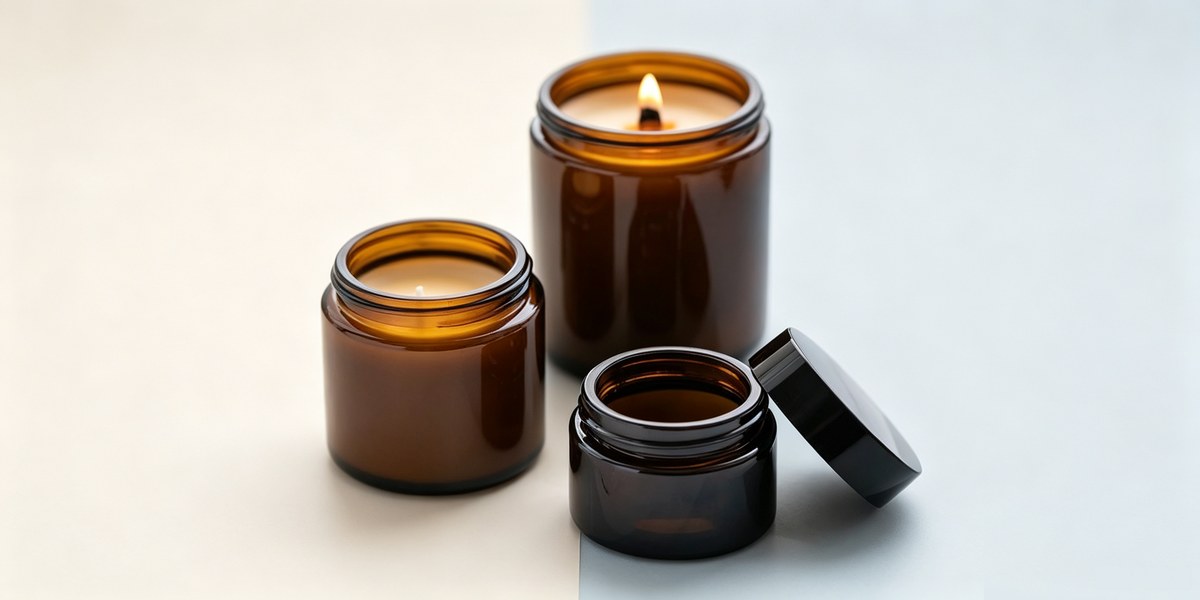
| Opaque or translucent | s.108(1)(a) — with an exception for dried cannabis | Amber for light-sensitive programmes; clear flint is permitted for dried flower, see below |
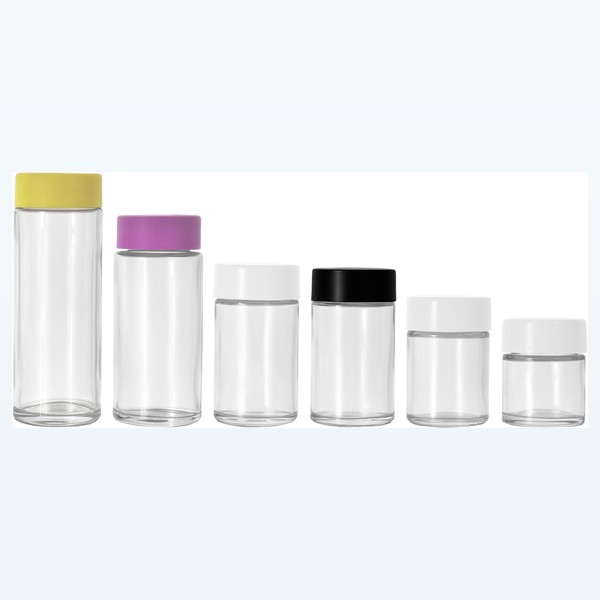
| Maximum 30 g of dried cannabis per container | s.108(1)(f) | 1 oz through 6 oz sizes, sized to real retail fills up to 28 g |
Clear glass is legal for dried cannabis in Canada
This is the one most buyers get wrong, and it is worth understanding before you pay for a colour you do not need. Section 108(1)(a) says the immediate container must be opaque or translucent — but section 108(2) exempts dried cannabis and fresh cannabis from that rule entirely. For dried flower, a transparent container is permitted. The opaque-or-translucent rule still governs other classes such as edibles and extracts.
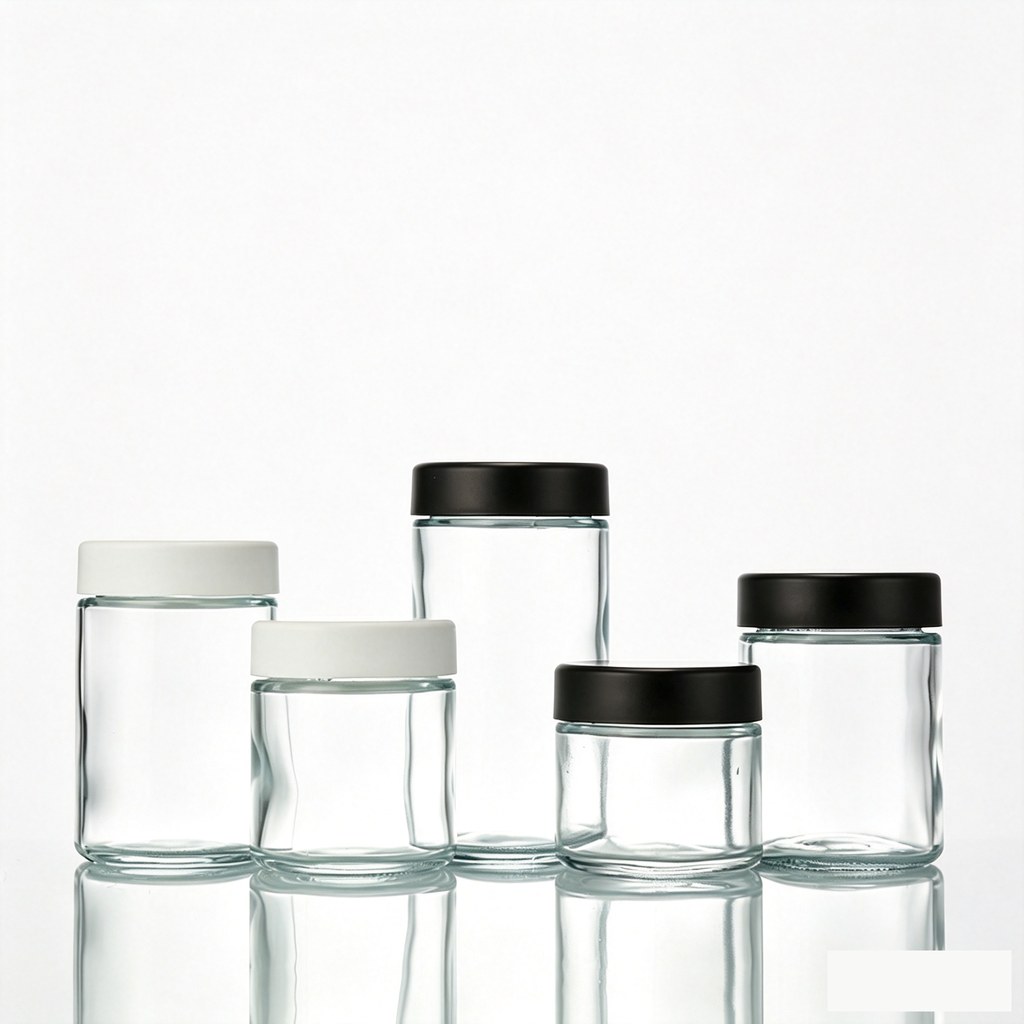
So a clear flint jar is a lawful choice for dried cannabis in Canada. Plenty of brands still choose amber, because it protects cannabinoids and terpenes from light over a long retail shelf life, and we hold amber too. But if your reason for buying opaque jars was a belief that Canadian law demands it for flower, it does not. What the law does demand for dried cannabis is the child-resistant closure, the security feature and the 30 g ceiling.
Sizing to the 30 g ceiling
Section 108(1)(f) limits an immediate container to no more than the equivalent of 30 g of dried cannabis. Note that the limit is on the contents, not the jar’s capacity — a 6 oz jar holding 28 g is compliant. In practice 28 g is the largest retail fill, and the sizes below are what Canadian operators reorder:
| Retail fill | Jar size we hold | Neck finish | CR cap |
|---|
| 1 g | 1 oz | 57 mm | Push and turn, black or white |
| 3.5 g — an eighth | 1 oz, 2 oz | 57 mm | Push and turn, black or white |
| 7 g — a quarter | 2 oz, 2.5 oz, 3 oz | 57 mm, 60 mm | Push and turn, black or white |
| 14 g — a half | 4 oz | 60 mm | Push and turn, black or white |
| 28 g — an ounce | 6 oz | 60 mm | Push and turn, black or white |
Fill a sample before you commit. How much flower a jar holds depends on density, trim style and how tightly it is packed; loose whole bud takes far more space than dense machine-trimmed flower of the same weight. We send samples from the same stock we ship from.
Child resistance: the standard Canada accepts, and the documents to ask for
Canada does not write its own jar test. Section 108(1)(e) points at the definition in C.01.001(2) to (4) of the Food and Drug Regulations, which accepts a package that either passes a child-and-adult panel test directly, or complies with one of three named standards: CAN/CSA-Z76.1 (Reclosable Child-Resistant Packages), EN 28317:1992 (which reiterates ISO 8317), or the US 16 CFR 1700.15 series.
Our closures are tested to 16 CFR 1700.20 and classified under ASTM D3475, and the CR test reports are available on request. One thing to check with any supplier, including us: child resistance is a property of the jar and closure together. A cap that passed on one finish has not automatically passed on another, so ask for documentation matching the exact combination you are buying.
Plain packaging: what we can decorate, and what the rules forbid
Canadian cannabis packaging is plain by law. Sections 111 and 112 prohibit brand elements and images on any container surface, and section 113(1) requires a single uniform colour — though section 113(1.1)(b) permits the cap or lid to be a different colour from the container. Colours also have to contrast with the yellow of the health warning and the red of the standardized cannabis symbol, and cannot be metallic or fluorescent.
What this means in practice, and we would rather say it plainly than take an order we cannot legally fill:
We can doA single uniform colour sprayed on the jar, in a non-metallic, non-fluorescent shade. A cap in a contrasting permitted colour. A tamper-evident band.
We will not doA logo, slogan, brand mark or image printed on a cannabis immediate container. The Regulations prohibit it, for us and for your printer.
Where branding belongsOuter cartons, shipping cases and inserts — where the immediate container rules do not reach.
Bilingual and Quebec-ready
Section 123(1)(d) requires the warning “KEEP OUT OF REACH OF CHILDREN / TENIR HORS DE LA PORTÉE DES ENFANTS” on the label, in both official languages, alongside the health warning message, the standardized cannabis symbol, lot number, packaging date and licence-holder details. In Quebec the Charter of the French Language requires French to predominate, which is a separate question from the federal bilingual rule and one worth settling with counsel before artwork is cut.
We supply the jar, the closure and the security band. We do not print the regulated label, and we would not be the right supplier if we claimed to — that is your facility or your label converter. We can coordinate French-language carton printing for the outer pack.
What it actually costs to land
Here is the difference that makes a Canadian programme easier to price than an American one. Glass containers enter Canada under HS 7010.90.00, whose most-favoured-nation rate is free. GST at 5% is collected on import and is recoverable as an input tax credit by GST-registered businesses, so it is a cash-flow item rather than a cost.
The same jars landed in the United States currently carry a duty stack of roughly 37.5% (a 25% Section 301 List 3 rate plus a 12.5% forced-labour tariff applied from 2026) on top of a 0% MFN rate. There is no Canadian equivalent of that stack on these lines. Confirm current rates with your broker before you budget — tariff schedules move — but the structural point holds: the Canadian duty line on glass jars is zero.
How it travels
Goods leave us within 48 working hours for in-stock sizes. From there the routing depends on where you are:
- British Columbia and the Prairies — Vancouver or Prince Rupert, roughly 14 to 18 days on the water, then 7 to 10 days rail to Toronto if you are further east.
- Ontario and Quebec — all-water to Halifax or Montreal runs about 30 to 38 days, often cheaper per container and less exposed to the winter rail bottlenecks that hit western corridors in January and February.
- November to March — we pack with desiccants and moisture-barrier liners. Glass tolerates cold; the risk in a Canadian winter is condensation inside cartons, which weakens the board and stains labels.
On DDP terms the freight, clearance and delivery are inside the number we quote, so none of this becomes your project.
Held in stockStanding lines held year-round, not a production run started after you order.
Ships in 48 hoursCartons pulled from stock. No 25 to 35 day furnace queue.
One DDP numberFreight, clearance and delivery inside the quote. You are not the importer of record.
Mix sizes freelySizes and both finishes combined to reach the 3,000 piece minimum.
Order terms
Minimum order3,000 pieces per order
MixingSizes and finishes combined freely
Lead time48 working hours to ship
Delivery termsDDP, any Canadian province
Ask for the current Canadian stock listQuantities move week to week. The in-stock page carries the 57 mm and 60 mm series with carton specifications, and we confirm availability for your exact list on the day you ask. Send us your sizes and delivery province and we will reply within 24 hours with a landed price.
Questions Canadian licence holders ask us
Is child-resistant packaging mandatory for cannabis in Canada?
Yes for the immediate container of most cannabis products. Section 108(1)(e) requires it to meet the child-resistant requirements of C.01.001(2) to (4) of the Food and Drug Regulations. Cannabis plants and seeds are carved out; dried cannabis is not.
Can I use clear glass jars for dried cannabis?
Yes. Section 108(1)(a) requires opaque or translucent, but section 108(2) exempts dried and fresh cannabis from that requirement, so a transparent jar is permitted for flower. Edibles and extracts remain under the opaque-or-translucent rule.
What is the largest fill one container may hold?
No more than the equivalent of 30 g of dried cannabis under section 108(1)(f), so 28 g is the practical retail ceiling. The limit is on what you put in, not on the jar's capacity.
Which child-resistance standard does Canada accept?
C.01.001(2) to (4) of the Food and Drug Regulations accepts direct panel testing, or compliance with CAN/CSA-Z76.1, EN 28317:1992 (which reiterates ISO 8317), or the US 16 CFR 1700.15 series. Our closures are tested to 16 CFR 1700.20 and classified under ASTM D3475, and we send the reports on request.
Can you print our logo on the jars?
Not on a cannabis immediate container. Sections 111 and 112 prohibit brand elements and images, and section 113(1) requires one uniform colour, though the cap may differ in colour under 113(1.1)(b). We supply single-colour sprayed jars; logos go on outer cartons and shipping cases.
Do the jars need a tamper-evident feature?
Yes. Section 108(1)(d) requires a security feature giving reasonable assurance the package has not been opened before receipt. We supply matched tamper-evident shrink bands.
Do you print the bilingual warning and the cannabis symbol?
No. The regulated label, including the bilingual warning, the health warning message and the standardized cannabis symbol, is applied by the licence holder. We supply the jar, closure and band, and can coordinate French-language printing on outer cartons.
What duty applies importing glass jars into Canada?
HS 7010.90.00 carries a most-favoured-nation rate of free. GST at 5% applies at import and is recoverable by GST-registered businesses. There is no Canadian equivalent of the US Section 301 stack. Confirm current rates with your broker, as schedules change.
What is the minimum order for a Canadian shipment?
3,000 pieces per order, which you can reach with one size or by mixing sizes and both neck finishes, so the practical minimum per size is far lower.
How long does delivery take to Ontario or Quebec?
48 working hours to leave us, then about 14 to 18 days on the water to Vancouver or Prince Rupert, or 30 to 38 days all-water to Halifax or Montreal. Rail from Vancouver to Toronto adds 7 to 10 days.
Can you supply a Quebec account?
Yes. The jars and CR closures are the same; the additional work is French-language labelling and outer carton copy under the Charter of the French Language. Tell us early and we will build it into the quotation.